How prepaid tokens change event money flow
When you rely on traditional cash transactions at every vendor stall, your event money flow remains decentralised and difficult to track in real time. Moving to a prepaid token system shifts this dynamic completely by requiring attendees to exchange their physical currency at specific controlled points rather than at individual bars or food trucks. This centralised approach means your security team only needs to monitor and collect cash from a few dedicated locations, which significantly reduces the risk of loss or theft. You eliminate the need for every vendor to manage a cash float, and that simplifies your entire operational footprint on the ground.
Without a fragmented payment setup, your project managers can monitor total event revenue much more accurately throughout the day. A token ecosystem standardises the currency used across the site, ensuring that every vendor operates under exactly the same financial parameters. You can track exactly how many tokens are in circulation at any given moment, which provides a clear picture of incoming funds before a single drink or meal is sold. This unified financial structure allows your team to maintain tight oversight while removing the administrative burden of handling loose change across dozens of independent stalls.
Centralising cash collection at top up stations
The foundation of a successful token rollout relies entirely on how effectively you manage the points where attendees exchange their money. Top up stations serve as the sole entry point for funds into your event ecosystem, meaning they must be designed to handle high volumes of traffic without creating bottlenecks. By concentrating all physical currency transactions into these designated areas, you strip the complexity of cash handling away from the busy vendor stalls. Your team can then focus their security and administrative resources on these specific hubs rather than dispersing them across the entire festival footprint.
Positioning stations for optimal flow
Placing your top up stations in the right locations ensures that attendees can acquire tokens smoothly without disrupting the natural movement of the crowd. You should position the primary purchasing hubs near the main entrances but far enough inside the venue to prevent queues from spilling out into the access gates. It helps to separate the token purchasing queues completely from the food and beverage lines so that attendees do not cross paths while trying to complete different tasks. Distributing smaller satellite stations throughout the event grounds also prevents a single central hub from becoming overwhelmed during peak arrival times.
Staffing and equipment requirements
Running efficient top up stations requires specific hardware to process payments quickly and securely. Your booths need to be equipped with high-speed card terminals and secure cash drawers, along with reliable Point of Sale (POS) software that can continue functioning even if the local network connection drops. Staffing these stations demands personnel who are trained exclusively in handling rapid financial transactions and managing the fixed fiat-to-token conversion ratio. You should also establish a secure central cash room nearby, which allows your security personnel to safely remove accumulated funds from the booths at regular intervals.
Shortening bar queues and reducing vendor errors
The most immediate operational benefit you will see at the point of sale is a drastic reduction in the time it takes to complete a transaction. When your bar staff and food vendors only accept prepaid tokens, they no longer have to waste valuable seconds calculating exact change or waiting for card payments to process over a congested network. A bartender simply takes the required number of tokens and hands over the drink, which keeps the queue moving continuously during your busiest periods. This rapid exchange process improves the overall attendee experience while allowing your vendors to serve significantly more customers per hour.
Removing cash from the vendor equation also eliminates the most common sources of human error at the point of sale. Because the staff do not need to mentally calculate currency differences or handle complex split payments, the likelihood of a miscalculated transaction drops to zero. You remove the necessity for vendors to perform frequent cash drops during their shifts, which frees them to focus entirely on product delivery and customer service. By standardising the payment method across all stalls, your team ensures that every transaction is processed cleanly, accurately, and without unnecessary delay.
Steps to roll out a prepaid token system
Deploying a token infrastructure requires a structured approach that covers everything from initial system selection to on-site execution. You need to map out the exact sequence of deployment to ensure that your hardware, staff, and physical tokens are fully prepared before the gates open. The educational resources provided by RFID & NFC outline these standard industry practices to help project managers navigate the technical requirements objectively. By following these concrete steps, your team can integrate a token framework into your existing event layout with minimal friction.
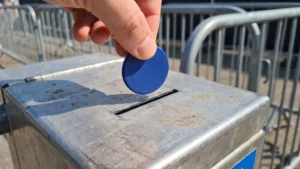
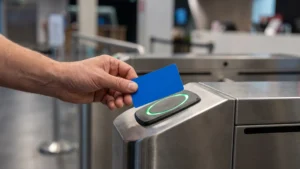
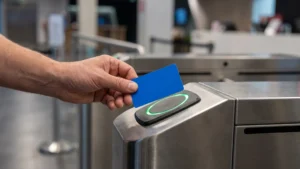
- Choose the token medium: Your first step is to decide whether you will use physical plastic coins or a digital alternative like Radio Frequency Identification (RFID) wristbands. Physical tokens require simpler hardware, while an RFID setup involves scanning chips that hold digital balances. You must evaluate your available budget and the technical capacity of your venue before committing to a specific format. The right choice depends entirely on what infrastructure you can reliably support during the event.
- Determine pricing tiers: You need to establish a fixed conversion ratio between real currency and your event tokens. Keeping this calculation simple ensures that both your attendees and your staff can process transactions without confusion at the booths. You should set clear pricing structures well before the event so you can program your sales terminals accurately. A straightforward exchange rate prevents ordering bottlenecks and speeds up the initial top up process.
- Calculate token inventory: If you opt for physical tokens, you must order significantly more stock than your projected sales capacity dictates. Industry standards suggest ordering twenty to thirty percent extra to account for attendees hoarding tokens, losing them on the grounds, or taking them home as souvenirs. Running out of currency halfway through the day will halt your entire payment infrastructure and cause severe operational disruptions. You must secure this inventory early and store it in a locked central room.
- Establish split queueing: You must use clear and elevated signage to direct your attendees to the token purchasing booths before they attempt to buy food or drinks. Separating the payment queues from the product collection lines is the core mechanism that eliminates dual waiting times. Your event layout should naturally guide visitors toward the top up stations first, reinforcing the policy that cash is not accepted at the vendor stalls. This physical separation is critical for maintaining a continuous flow of foot traffic.
- Deploy mobile sellers: To reduce congestion at your stationary booths during peak arrival windows, you can utilise roaming staff members equipped with mobile card readers. These mobile sellers can walk through the entrance queues and sell standard token packages directly to attendees as they wait. This tactic alleviates the immediate pressure on your main top up stations and distributes the initial purchasing surge across a wider area. You will find this especially useful during the first two hours when most visitors arrive simultaneously.
Managing end of day vendor reconciliation and data
When the event concludes, your operational focus shifts from processing transactions to closing out vendor accounts and securing the collected revenue. A token ecosystem dramatically simplifies this closing phase because you are counting a standardised unit rather than sorting through different denominations of physical currency. You can execute this process efficiently by having a structured plan for collecting, verifying, and tallying the tokens from every participating stall. This structured approach allows your project managers to finalise the financial outcomes quickly and transition smoothly into post-event analysis.
Reconciling vendor accounts quickly
The reconciliation process begins by collecting the locked drop boxes from each vendor stall and transporting them to your secure counting room. If you are using physical plastic coins, your team can use digital counting scales to calculate the exact volume of tokens returned by each vendor in a matter of minutes. You can then cross-reference these physical token counts against the sales data recorded by your top up stations to ensure everything balances correctly. This rapid verification allows you to calculate the exact revenue split and execute payouts to your third-party vendors without days of manual accounting.
Analysing usage data for future events
Beyond the immediate financial reconciliation, the data generated by your token system provides valuable insights into how attendees navigated your event. You can review the transaction logs from your top up stations to determine the peak purchasing times, which helps you optimise your staffing schedules for the following year. Analysing the token return rates also reveals how much currency was retained as souvenirs or left unspent, allowing you to adjust your inventory forecasts accurately. By examining these concrete metrics, your team can refine the entire payment infrastructure and improve operational efficiency for your next deployment.
Transitioning smoothly to cashless event operations
Implementing a prepaid token system fundamentally streamlines how your organisation handles money, queues, and vendor management across any large venue. By centralising your cash collection and standardising the payment method at the point of sale, you remove the most common friction points that slow down event operations. The steps outlined here provide a solid foundation for your project managers to evaluate, plan, and execute a deployment that integrates cleanly with your existing logistics. When you control the currency, you control the flow of the event, ensuring a secure and efficient experience for both your staff and your attendees.
How do I choose the right token medium for my event?
Choose the token medium by matching your speed, data needs, and venue constraints. Physical tokens are simple and low cost without relying on connectivity. Radio Frequency Identification wristbands or cards provide fast taps, data, and easy refunds, while Quick Response codes fit phone based flows when scanning points are clear.
What does on site setup look like to keep queues short?
Split queues so attendees buy tokens before they approach bars and stalls. Run token booths with card terminals and offline point of sale software. Add roaming sellers with mobile card readers during peaks to relieve lines. Train your team to refuse cash at vendors and use a cash room.
How many tokens should we plan for, and how do we avoid stockouts?
Start from your sales forecast, then order 20 to 30 percent extra to cover loss, hoarding, and souvenirs. Issue numbered rolls or weighed bags to each cashier and record opening balances. Schedule mid event collections so stalls do not hold large volumes. Deploy roaming sellers to add capacity during spikes.
How should we handle reconciliation and vendor payouts at the end of the day?
Weigh or count collected tokens, then calculate sales using the fixed token value you set. Cross check totals against point of sale data to flag gaps. Use locked drop boxes and a custody log to protect handling. Pay vendors by the agreed split, then process attendee refunds per policy.
What happens if the network drops during the event?
Use systems with offline processing, which queues transactions locally and syncs them when connectivity returns. RFID readers and point of sale terminals should validate balances from a temporary local store during outages. Test fallback flows before doors open so your team knows exactly what to do.