Understanding token security risks at events
Addressing token security directly allows your team to mitigate risks before they impact your event revenue or attendee safety. Every venue faces the reality that standard physical passes and basic digital credentials can be copied, shared, or misused if they lack proper validation mechanisms. As an educational resource, RFID & NFC provides objective practical guides to help you understand these technologies and assess your environment pragmatically. Rather than relying on complex technical jargon, you can look closely at where tokens change hands and how access is granted. This objective evaluation helps you identify the specific vulnerabilities in your current setup and apply targeted solutions that actually fit your infrastructure.
Identifying common points of token vulnerability
Mapping out your event space helps you pinpoint the exact operational gaps where access credentials become vulnerable to misuse. When you understand the specific ways attendees interact with your systems, you can anticipate problems rather than reacting to them on the day of the event. By breaking down the most frequent scenarios for fraud, your team gains a practical baseline for strengthening your entry and transaction points. This structured approach ensures you apply the right level of security exactly where it is needed most.
Unauthorised copying of standard tokens
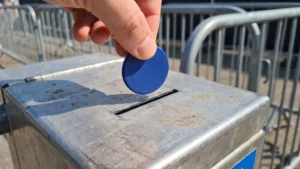
Basic paper passes and standard plastic chips offer very little resistance to straightforward duplication efforts. Bad actors often use standard commercial printers to replicate flat designs, which means your front-line staff might struggle to distinguish a fake credential from a genuine one during a busy rush. When you rely solely on simple visual designs, you increase the risk of unauthorised individuals accessing restricted areas or consuming premium services. Recognizing this specific vulnerability prompts you to introduce layers that cannot be easily simulated by standard office equipment.
Unauthorised sharing between attendees
High-traffic environments naturally create opportunities for attendees to hand their valid tokens back to friends waiting outside the perimeter. This type of unauthorised sharing often occurs at secondary checkpoints, such as VIP lounge entrances or backstage access doors, where security staff might not have a clear line of sight to the main gate. Without a system that ties a credential to a specific person or tracks its entry status, your team cannot easily detect when a single pass is used multiple times. You can close this gap by evaluating how your crowd moves and identifying the blind spots in your physical layout.
Reselling tokens outside the venue
Unregulated resale markets create significant operational headaches when attendees purchase invalid or duplicated tokens from third parties just outside your event perimeter. Your team ends up managing the fallout at the gates, dealing with frustrated visitors who realize their purchased access is completely void. This scenario slows down your entry queues, frustrates your staff, and damages the overall trust in your event management process. Understanding how and where these secondary transactions happen allows you to implement verification steps that render transferred tokens useless.
Applying visual design choices to reduce fraud
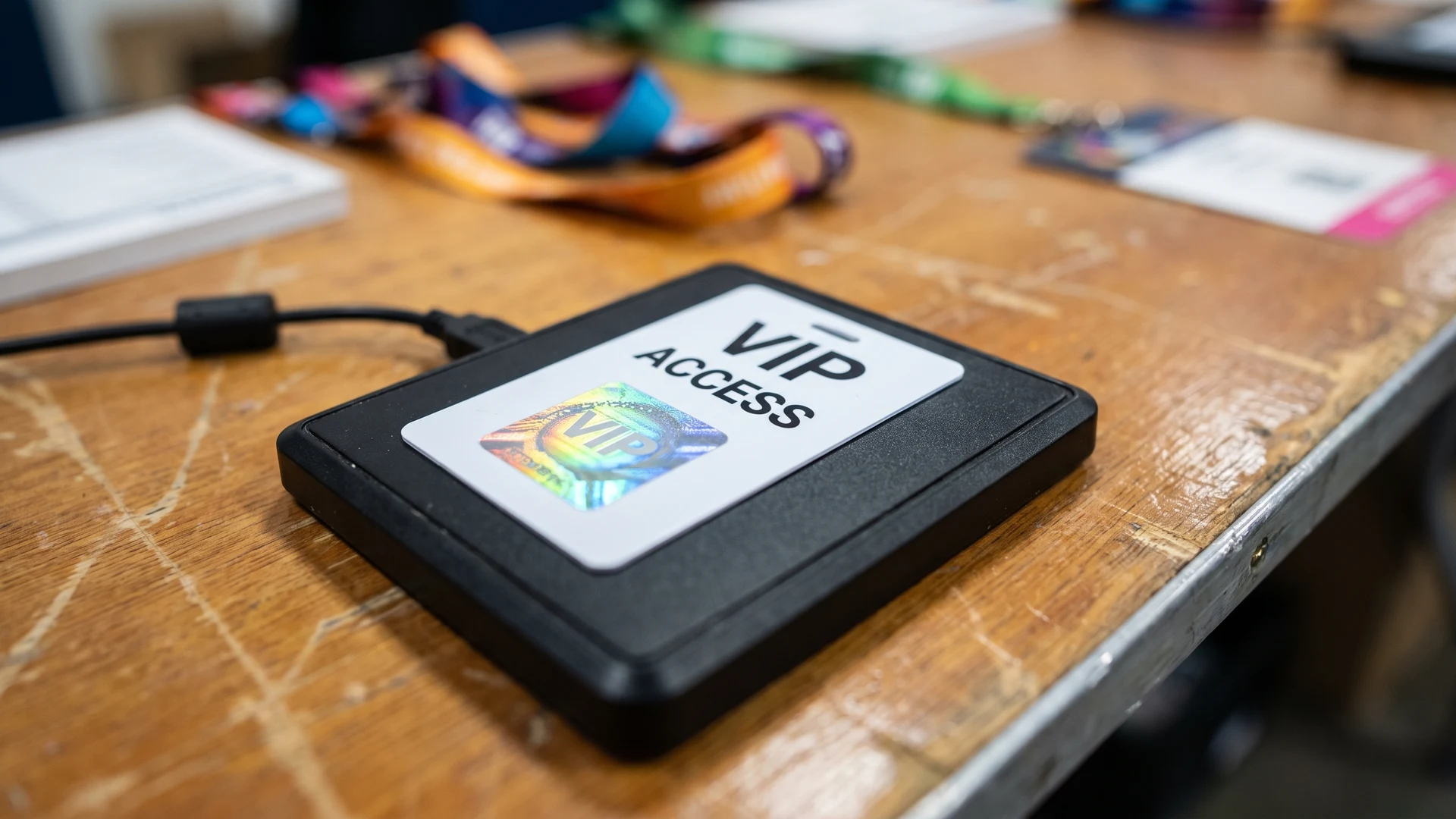
Integrating strategic physical design choices into your credentials provides an immediate and low-tech barrier against counterfeiting. You can incorporate Optically Variable Devices (OVDs), which are small holographic foils that show changing colors or moving images when tilted under normal lighting. These foils bond closely with the underlying material, meaning any attempt to peel them off destroys the hologram completely and alerts your staff to the tampering. Adding thermochromic ink offers another accessible solution, as this heat-sensitive pigment changes color or disappears when rubbed with a warm finger, allowing your team to verify authenticity instantly without special tools.
You can further secure physical wristbands and passes by focusing on how they are fastened and constructed. Using die-cut security slits on adhesive closures ensures that any attempt to peel the band apart forces the material to tear, making unauthorised transfers immediately obvious. For plastic or vinyl options, one-way locking snaps prevent the wearer from unfastening and sharing the band without permanently breaking the plastic teeth. Layering these overt visual markers creates a robust front-line defense that requires no heavy technical integration, giving your security personnel clear indicators to spot fraudulent passes quickly.
Implementing unique identifiers and reader checks
Moving beyond physical security, digital tracking transforms your access control by assigning an uncopyable digital signature to every single pass. Radio Frequency Identification (RFID) and Near Field Communication (NFC) technologies replace static serial numbers with dynamic data that interacts directly with your scanning hardware. When you integrate these secure chips into your existing infrastructure, your team can prevent credential cloning while processing entries smoothly. This technical shift ensures that a copied credential fails the moment it interacts with your system.
Assigning unique digital identities
Modern secure tags rely on a cryptographic challenge and response mechanism rather than broadcasting a simple, static Unique Identifier (UID). When a reader powers the token, it sends an encrypted random puzzle that the chip must solve using a private key stored safely inside its hardware. Because this secret key never leaves the chip and cannot be intercepted over the air, any cloned token missing the original key will fail the authentication test instantly. Some advanced chips even generate a completely new digital signature on every single tap, meaning that intercepted data becomes entirely useless for future access attempts.
Validating tokens at the reader level
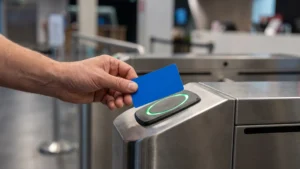
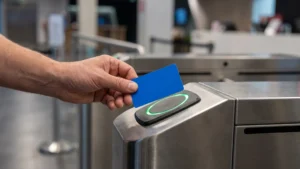
The validation process happens automatically through a structured hardware and software handshake between the reader and the token. As the credential enters the radio frequency field, the reader isolates the signal and initiates communication to retrieve the chip’s basic identifier. The reader then issues a cryptographic challenge, verifying that the token possesses the correct secret key without ever exposing that key during the transmission. Once authenticated, the reader checks transaction counters to detect replay attacks and reviews internal timestamps before sending a command to unlock a turnstile or log a successful entry.
Establishing procedures for lost or compromised tokens
Even with robust technology in place, your team needs a clear operational protocol to handle situations where access credentials are lost or actively compromised. Establishing a concrete sequence of actions bridges the gap between your technical systems and your human processes, ensuring staff respond consistently under pressure. When your implementation lead trains the ground team on these specific steps, you minimize confusion and maintain a secure environment without stopping the flow of the event. A structured approach gives your personnel the confidence to resolve issues swiftly and professionally.
- Isolating the credential: Instruct your staff to step the attendee out of the main queue to prevent bottlenecks while the suspect pass is inspected.
- Verifying the status: Use your reader hardware to scan the token and check your central system for any duplicate entry flags or disabled statuses.
- Revoking digital access: Direct your system administrator to immediately deactivate the lost or compromised digital profile so it cannot be used at any other checkpoints.
- Issuing a replacement: Provide a secure process for verifying the attendee’s original purchase receipt or identity before assigning a new, freshly authenticated token.
- Documenting the incident: Require your security personnel to log the time, location, and nature of the compromise so your team can analyze fraud patterns after the event concludes.
Balancing security measures with a simple entry experience
Implementing strong security measures should never result in excessive bottlenecks or overcomplicate the natural flow of your attendee experience. When you select the right combination of visual deterrents and digital reader checks, your access control works quietly in the background without causing delays. Your project managers must continually evaluate whether new validation steps are serving the event or simply creating unnecessary friction at the gates. Maintaining this balance ensures that your technical solutions protect your operational integrity while welcoming your guests smoothly and efficiently.
Which low-friction visual security features should we add to tickets or wristbands?
Start with two or three overt features that staff can verify in seconds, such as a small hologram, color shifting ink, and an ultraviolet (UV) mark. Add tamper evident slits or one way snaps on wristbands, plus sequential numbering. These choices deter copying without slowing entry.
How do RFID or NFC tokens actually prevent cloning at the gate?
Radio Frequency Identification (RFID) and Near Field Communication (NFC) tokens prevent cloning by using cryptographic challenge response or rolling codes. The RFID reader sends a random number, the token proves it holds a secret key, and each tap yields a fresh signature. Copies fail that test.
What reader-side checks keep validation fast while catching duplicates?
Configure the RFID reader to authenticate the token, verify expiration, and enforce counters or velocity rules. Check a Unique Identifier (UID) only as a fallback, since UIDs can be cloned. Give immediate green or red feedback, and log token ID, time, and gate for audits.
What should our team do when a duplicate or suspicious token appears?
Deny entry politely, separate the guest, and verify identity against the registration record. Confiscate the token, mark it blocked in the system, and record time, location, and staff ID. Offer a verified reissue path on site to resolve genuine mistakes.
How do we handle lost tokens across a multi-day event without abuse?
Bind each token to a person, then allow one reissue after identity checks, with the original instantly revoked. Require a short cooldown to stop rapid swaps, note the reason, and alert security on second requests. Publish the policy clearly before gates open.