Branding tokens for marketing campaigns and promotions
Introducing custom token designs for your marketing campaigns allows you to engage customers visually while maintaining the reliable data capture your systems require. Your team can run limited time promotions and unique loyalty schemes by deploying tokens that carry custom artwork without replacing the underlying hardware. Balancing creative marketing initiatives with reliable technical performance ensures your readers and scanners continue to function exactly as expected. By approaching these branded tokens as standard operational assets, you bridge the gap between aesthetic goals and technical stability.
Deciding when a campaign needs a custom token design
Before your team commits to manufacturing a physical token variation, you need a clear framework to assess whether the promotional event actually justifies the operational effort. Introducing a new physical asset requires logistical coordination across your marketing and technical departments. You must evaluate the potential return against the time required to configure and distribute the new designs. This evaluation prevents you from overcomplicating your systems for short term campaigns that might perform just as well with digital alternatives.
Evaluating campaign duration and scale
A temporary weekend promotion rarely justifies the cost and complexity of a custom token rollout, whereas a multi-month loyalty program provides the necessary runway for a return on investment. You need to calculate how many users will realistically interact with the physical token during the specific timeframe. Large scale events with high participant volumes make physical tokens a memorable touchpoint that drives engagement. By accurately projecting the scale of your campaign, you ensure the physical rollout aligns with your actual marketing impact.
Assessing the impact on current infrastructure
Every new token design introduces a variable into your established tracking software and hardware environment. Your team must confirm that the current readers can process the new tokens without requiring extensive physical recalibration or software updates. If a custom design forces you to modify your baseline operational standards, the hidden costs of the campaign will quickly outweigh the benefits. Maintaining your baseline system stability should always remain the priority when you approve new marketing variations.
Aligning token design with technical specifications
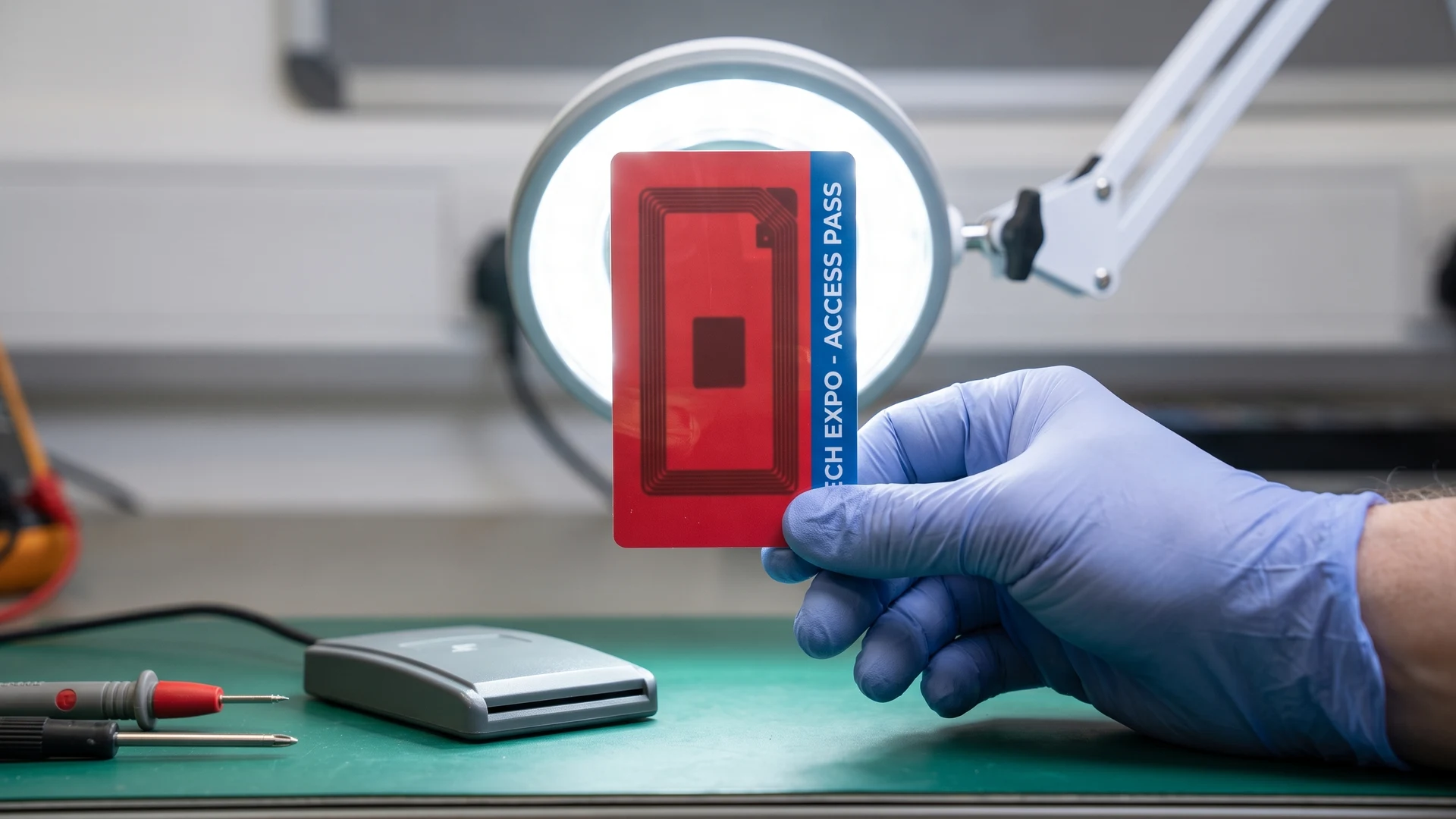
The aesthetic design of your promotional token must not interfere with the Radio Frequency Identification (RFID) antennas embedded inside it. Using solid metallic foils or conductive inks heavily degrades performance by causing signal reflection and absorbing the electromagnetic energy required to power the passive chip. When decorative metallic layers sit too close to the internal inlay, they shift the resonant frequency and create destructive interference that blocks the reader signal. To prevent these technical failures, you should use physical spacers made of non-conductive materials or incorporate thin ferrite shielding layers that isolate the magnetic field from the reflective graphics.
Beyond metallic branding elements, the physical shape and casing thickness of your token also influence how well the internal antenna communicates with your hardware. Standard plastic enclosures do not block Radio Frequency (RF) waves, but adding too much thickness increases the physical distance between the token and the reader, which reduces the magnetic induction strength. Placing the internal antenna dead center creates a symmetric radiation pattern, allowing users to tap the token reliably from almost any angle. By establishing clear keep-out zones where no metallic ink overlaps the antenna coils, you maintain operational reliability despite these cosmetic changes.
Setting up tracking for token redemption and usage
Integrating promotional tokens into your current software requires a clear data pipeline to monitor your campaign success accurately. As an educational resource, RFID & NFC recommends mapping out the exact data flow from the physical tap to your central analytics dashboard. Your system must securely capture the unique identifier of each token and route it through an encrypted connection to prevent unauthorized access or duplicated redemptions. Following a sequential process ensures the data from your new campaign tokens flows correctly into your existing analytics tools without corrupting your standard inventory metrics.
- Registering promotional stock: You must register the new batch of tokens in your inventory management system as unique, non-revenue Stock Keeping Units (SKUs). Assigning a zero or nominal cost basis to these assets prevents your marketing giveaways from artificially inflating your standard sales data. Segregating these promotional batches into a dedicated sub-inventory ensures your regular retail orders cannot accidentally pull from the marketing stock. This clean separation keeps your financial reporting accurate while the campaign runs.
- Mapping unique identifiers: Before the campaign begins, your database must pair the Unique Identifier (UID) of each token with a specific user profile or physical asset. When a user taps the token, the hardware reader extracts this unique payload, attaches a geographic timestamp, and dispatches a synchronous request to your central server. The back-end software then runs a lookup function to match the token with the active campaign. This step transforms raw hardware scans into actionable engagement metrics for your dashboard.
- Securing the data payload: The connection between your token reader and the tracking server must rely on a Transport Layer Security (TLS) handshake to encrypt the transmission. The server validates the incoming data using a cryptographic check, such as a JSON Web Token (JWT), to confirm the request has not been altered. To stop fraudulent duplicate use, the system checks a one-time-use number to block replay attacks from bad actors. This strict validation logic guarantees that every recorded redemption represents a genuine user interaction.
Handling the end of life for promotional tokens
Planning for the end of life of your custom branded tokens prevents leftover operational headaches in your software environment once the event concludes. Retiring these hardware assets properly requires you to sever their connection to your live systems and secure any leftover user data. Decommissioning the tokens correctly stops unauthorized access and protects your organization from potential data leaks. By managing the complete lifecycle of the technology, you ensure a clean and secure system update post campaign.
Deactivating tokens in your software database
You deactivate tokens by changing their authorization status directly within your cloud database rather than altering the physical hardware. The system updates the token record from an active state to a revoked state, which instantly denies access the next time a reader scans that specific identifier. Instead of permanently deleting the record, you should perform a soft deletion that preserves the historical audit logs for your campaign analytics. This centralized approach allows you to shut down thousands of promotional items simultaneously without needing to collect them physically.
Reprogramming tokens for future events
If you plan to reuse the physical hardware for another marketing cycle, you must confirm that the internal memory was not permanently locked during the initial setup. Chips configured with One-Time Programmable (OTP) lock bits cannot accept new data, whereas unlocked chips allow you to overwrite the internal memory multiple times. Erasing the old campaign data is a necessary security step to prevent competitors from scanning the tags to extract your proprietary URLs or campaign metrics. Clearing this information completely allows you to repurpose the assets safely for internal testing or new promotional rollouts.
Planning a smooth rollout for your custom tokens
Executing a pilot test with a small batch of your promotional tokens gives you the actionable confidence needed before launching the full campaign. You should distribute these test tokens to your internal staff and monitor how the tracking software processes the redemptions under normal operating conditions. This trial phase highlights any unforeseen integration issues, giving your team time to adjust the reader sensitivity or database mapping without impacting the customer experience. A thoroughly tested implementation process ensures your marketing integration proceeds smoothly without causing any disruption to your core operations.
When should a campaign get its own token design instead of reusing your standard one?
Create a distinct token design when the campaign needs unique tracking, time-bound artwork, or a new form factor. Reuse your standard design when simplicity and logistics matter more. Add a campaign batch ID for reporting and check Radio Frequency Identification, or RFID, reader compatibility before artwork approval.
How do you track redemptions from physical tokens in your analytics?
Map each token UID, meaning Unique Identifier, or EPC, meaning Electronic Product Code, to a profile or asset in your database. A Radio Frequency Identification, or RFID, reader sends the UID with a timestamp to your server. Your reports then show conversions, dwell time, and traffic flow.
Do metallic inks or foils on tokens affect read range, and what should you change in the design?
Yes, metallic inks and foils hurt performance, so change the design. Metal detunes the antenna and blocks energy, which shortens read range. Add a spacing layer or a thin ferrite sheet, which is a magnetic barrier, keep metallic graphics away from the antenna path, and use non-conductive metallic pigments.
How should you handle online and offline syncing to prevent double redemption at busy events?
Use real-time sync to block double redemption, and offline-first when connectivity is unreliable. A Radio Frequency Identification, or RFID, reader in real-time mode waits for a central approval before allowing a tap. With offline-first, your device applies local rules, records the redemption, and later reconciles.
What is the best way to retire or reuse tokens after a promotion ends?
You retire tokens by deactivating them in your database and clearing any user data. Deactivation flips a status flag so a Radio Frequency Identification, or RFID, reader rejects future taps without changing the tag. For reuse keep Near Field Communication, or NFC, tags unlocked, and for single use apply One Time Programmable, or OTP, locks.