Matching physical tokens and NFC wristbands to your event needs
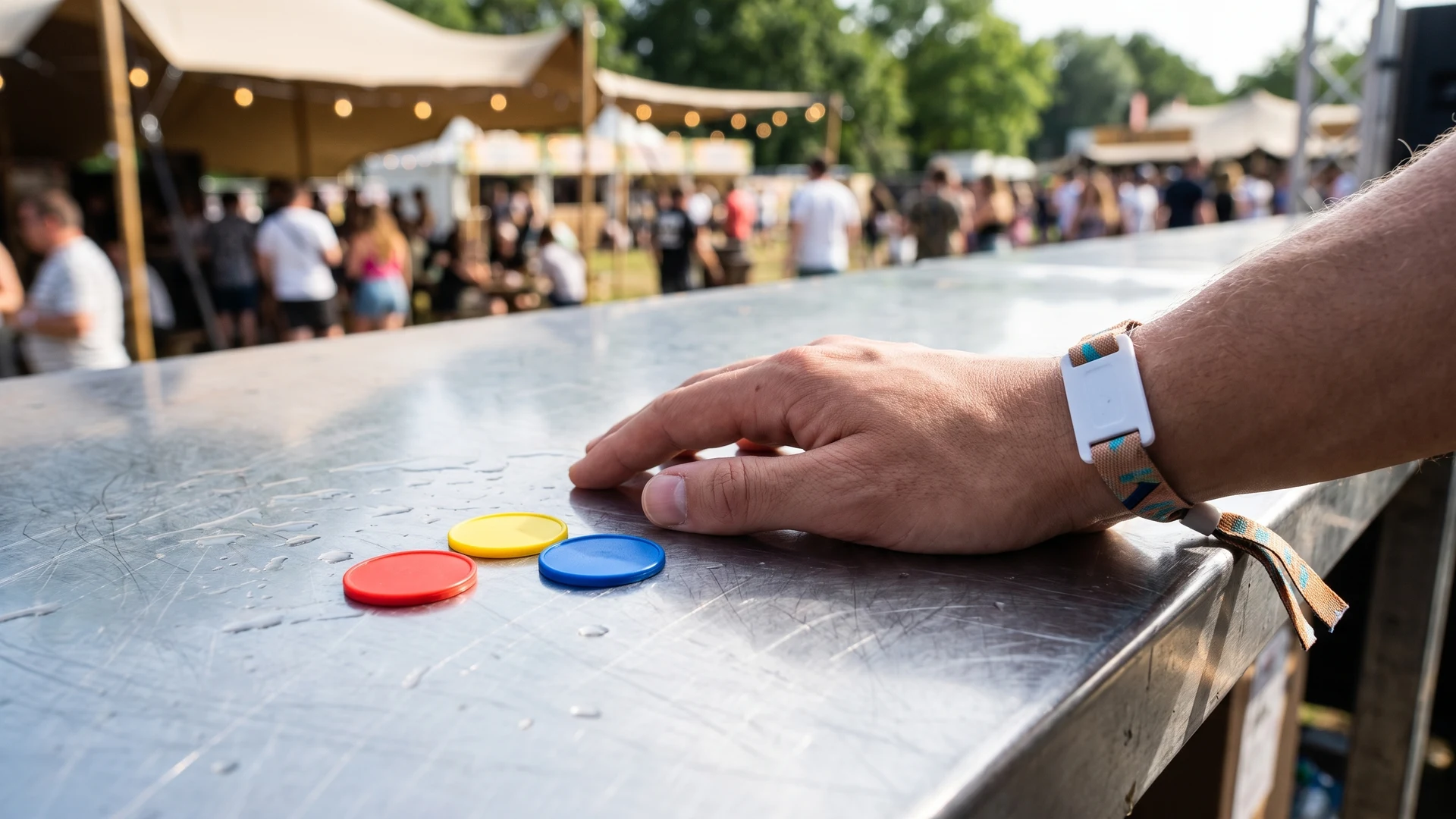
Finding the correct balance between simple physical tokens and advanced digital wearables requires you to look closely at your specific crowd handling requirements. Traditional plastic tokens offer a straightforward approach that requires no digital infrastructure, whereas Radio Frequency Identification (RFID) and Near Field Communication (NFC) solutions provide detailed data tracking and faster processing times. At RFID & NFC, our objective educational resources help your team assess which option best supports your operational goals and budget constraints. This focused evaluation ensures you select a reliable format that integrates smoothly with your existing access barriers without overcomplicating your event management processes.
How tokens and wristbands differ in physical performance
Evaluating physical performance means looking at how these items handle wear and tear while managing the data your event requires. Your team needs to understand the technical limitations of each format before committing to a specific hardware path. A system that works perfectly in a climate-controlled exhibition hall might fail entirely during a muddy outdoor festival. Assessing these physical realities up front helps you avoid equipment failures and ensures your attendees enjoy a smooth experience.
Traditional plastic tokens for simple transactions
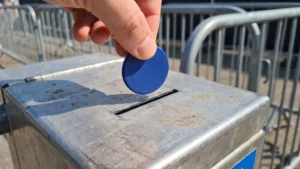
Traditional plastic tokens provide a highly durable and entirely offline solution for basic event transactions. Because they contain no electronic components, these tokens survive complete water submersion, heavy impacts, and extreme temperatures without losing their functional value. You simply hand them to your attendees, who then physically exchange them for drinks or merchandise without any scanning delays. This physical exchange offers a very visible and tangible method for basic crowd management, but it entirely lacks the ability to capture real-time tracking data.
RFID tokens for accelerated scanning
RFID tokens accelerate your entry processes by using wireless electromagnetic fields to capture data instantly. When an attendee walks past an Ultra-High Frequency (UHF) reader, the electromagnetic energy wakes up the battery-free chip inside the token within milliseconds. This process, known as backscatter modulation, reflects the unique identification data back to the reader without requiring a direct line of sight. Your security staff can scan hundreds of attendees per second as they walk through the gates, which completely eliminates the friction of manual ticket checks.
NFC wristbands for wearable data tracking
NFC wristbands offer localized data storage directly on the wearer, typically holding between 144 bytes and 888 bytes of information for standard event applications. High-capacity chips like the MIFARE Classic can even extend storage up to eight kilobytes, which gives your team the space to manage complex multi-day credentials securely. When the attendee taps their wristband against a reader, the short radio wave activates the chip and verifies their specific profile instantly. This physical contact requirement ensures deliberate actions at the scanning point, which prevents accidental misreads in tightly packed crowd environments.
Selecting the right format for your event zones
Matching the right format to specific zones ensures your technology actually supports your crowd flow rather than hindering it. Different areas of your venue demand entirely different transaction speeds and user interactions. You might need lightning-fast throughput at the main entrance, while your VIP areas require detailed credential verification. Mapping these distinct operational needs helps you deploy hardware exactly where it delivers the most value for your team and your guests.
Accelerating access control at entry gates
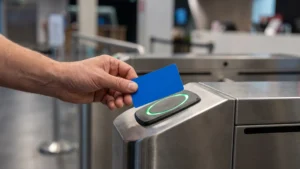
Handling large crowds at entry gates requires technology that processes attendees rapidly and reliably. NFC wristbands complete data exchanges in less than two hundred milliseconds, which reduces overall gate transaction times drastically compared to traditional barcode scanning. Because the hardware downloads the attendee database locally, your gates continue validating tickets smoothly even if cellular networks experience heavy congestion. This localized verification prevents frustrating line bottlenecks and ensures your guests transition from the queue to the event floor instantly.
Managing transactions for food and drink
Your food and drink zones benefit immensely from cashless transaction systems that remove the delays of handling physical currency. Portable Point of Sale (POS) terminals emit radio waves to power the passive chips in the attendee wristbands during the ordering process. When the customer taps their wristband against the terminal, the system reads their unique identifier and deducts the purchase amount in a fraction of a second. This seamless process improves transaction volumes, shortens the time people spend in line, and gives your team real-time visibility into vendor sales metrics.
Creating interactive touchpoints in activity areas
Activity areas thrive when you configure interactive touchpoints that connect the physical venue to your digital management ecosystem. You can set up stationary media screens or stand-alone sensors that respond whenever an attendee taps their credential against the reader. The backend engine maps the unique hardware identifier to the attendee profile, which allows you to trigger automated actions like gamification points, digital resource downloads, or session check-ins. This deliberate physical tap captures instant consent and engagement data without forcing your guests to fill out tedious digital forms.
Steps to assess your current event infrastructure
Evaluating your existing hardware and site conditions forms the critical first step before you commit to any new access technology. You need a structured methodology to determine exactly what your current setup can handle and where your operational gaps exist. This systematic review prevents you from investing in advanced digital systems that clash with your physical barriers or network capabilities. By following a clear sequential process, your team can build a realistic implementation plan that guarantees hardware compatibility across your entire venue.
- Audit your physical barriers: Begin by reviewing the turnstiles, temporary fences, and access gates you currently use to control crowd movement. You must ensure that any new scanning hardware can mount securely onto these structures without obstructing the natural walking path. If your physical barriers cause people to pause awkwardly while scanning, the fastest digital chip in the world will not prevent a bottleneck. Documenting these physical constraints helps you decide between a wearable wristband or a handheld token.
- Evaluate network reliability: Assess the cellular and wireless internet coverage across every zone of your event site to understand your connectivity limitations. Digital systems often require constant cloud synchronization to update ticket statuses and cashless payment balances in real time. If your venue suffers from heavy network congestion, you will need to prioritize hardware that supports local offline processing to keep lines moving. Identifying these network dead zones early allows you to place your most critical access points in areas with the strongest signal.
- Conduct a small pilot test: Set up a single entry lane or a dedicated vendor station to test your chosen hardware in a controlled environment before full deployment. This trial run gives your staff the opportunity to practice scanning procedures and handle potential error messages without the pressure of a massive crowd. You can measure the actual transaction speeds and adjust the reader positioning to find the most ergonomic scanning angle. Gathering this practical data ensures you can refine the process entirely before rolling the technology out to the wider attendee base.
Understanding the cost and complexity trade offs
Building a realistic business case requires you to examine the financial and operational implications of deploying simple plastic tokens versus integrated wireless systems. Traditional tokens carry a very low initial production cost and demand absolutely zero technical training for your temporary event staff. However, they introduce hidden labor costs when your team has to count, clean, and securely transport heavy bags of physical currency at the end of the night. Advanced wearable technologies eliminate this manual counting process, but they require a significant upfront investment in scanning terminals and software licensing.
You also need to consider the complexity of integrating these advanced technologies into your existing vendor workflows and security protocols. Deploying a fully digital cashless system means you must provide on-site technical support to troubleshoot reader malfunctions and manage digital balance top-ups. If your event involves just a few hundred attendees and a single entrance, overcomplicating your setup with expensive hardware might create more stress than it relieves. Weighing these practical trade offs ensures you select a solution that enhances your operational efficiency rather than overwhelming your project management team.
Planning your implementation and rollout
Moving from the technology selection phase to actual deployment on site demands a carefully structured rollout sequence. Your team should create comprehensive training materials that teach your front-line staff exactly how to handle failed scans, lost wristbands, and offline sync errors. Establishing these clear standard operating procedures minimizes disruption and gives your crew the confidence to manage the technology independently. By approaching the implementation systematically, you transform a complex technical integration into a seamless experience for both your operational staff and your attendees.
When is a simple plastic token the better choice?
Choose plastic tokens when you need a low cost, rugged option for single purpose exchanges like drinks or lockers with minimal setup. Near Field Communication (NFC) wristbands add data and speed, but tokens work when you only need a physical marker. You trade real time tracking for simplicity.
How much data can an NFC wristband hold?
Near Field Communication (NFC) wristbands typically provide 144 to 888 bytes of user memory, while advanced secure chips offer about 1 to 8 kilobytes. In practice, you store a unique identifier or a web link and keep profiles in the cloud. This keeps taps fast and permissions current.
How do RFID tokens speed up entry compared to QR codes?
Radio Frequency Identification (RFID) tokens do not need line of sight, so your entry line keeps moving while an RFID reader captures each credential in under one second. Quick Response (QR) codes require alignment and light, often taking 2 to 5 seconds per person. Batch reads shorten queues further.
What does setup look like for cashless payments with wearables?
With Radio Frequency Identification (RFID) wristbands, you link each band to an attendee account, let people top up funds, and place RFID readers at point of sale (POS) stations. The POS deducts balances on each tap and logs sales. Offline mode stores transactions and syncs later.
How do NFC touchpoints in activity areas get configured?
Near Field Communication (NFC) wearables pair to attendee profiles, then you place an RFID reader at each booth or kiosk and map a tap to a rule in your event system. The tap sends an identifier to trigger points, content, or check ins. Cloud or on chip storage both work.