
Structuring your multi-site token strategy
Deploying Radio Frequency Identification (RFID) and Near Field Communication (NFC) tokens across various locations introduces operational challenges that demand a unified strategy to prevent user confusion. When your team standardizes token designs and data architecture early in the project, you create a smoother and more predictable experience for both end users and facility staff. This scalable approach balances the need for local branch identity with the efficiency of central management. Establishing clear rules for your physical and digital infrastructure from the start ensures that your token system remains a practical tool rather than an administrative burden.
Choosing between shared designs and local variants
Comparing different visual approaches to physical token branding helps you decide the best path when multiple entities or branches are involved in the deployment. Your team must weigh the practical trade-offs between bulk standardization and localized branding to find a solution that fits your operational capacity. Selecting the right physical design impacts how easily your staff can manage daily inventory. Understanding these differences allows you to build a system that supports both your central procurement goals and your local facility needs.
Using centralized base designs
A single universal token design simplifies your procurement process and reduces the risk of localized stock shortages. When your team uses a centralized base design, you can order inventory in larger volumes and distribute the exact same tokens to any branch that needs them. This approach removes the complexity of managing separate visual identities and keeps your supply chain highly efficient. Employees and visitors also experience a consistent brand interaction regardless of which facility they access.
Applying localized brand elements
Visually distinct tokens for different branches give each location a strong individual identity, which often helps local managers build site-specific engagement. Applying localized brand elements means you create unique colors, logos, or shapes for every facility in your network. While this localized branding makes it easy for staff to visually identify where a token belongs, it requires your team to manage multiple separate inventory streams. You must carefully track stock levels for each specific design to ensure that no single branch runs out of their unique physical tokens.
Creating a hybrid visual approach
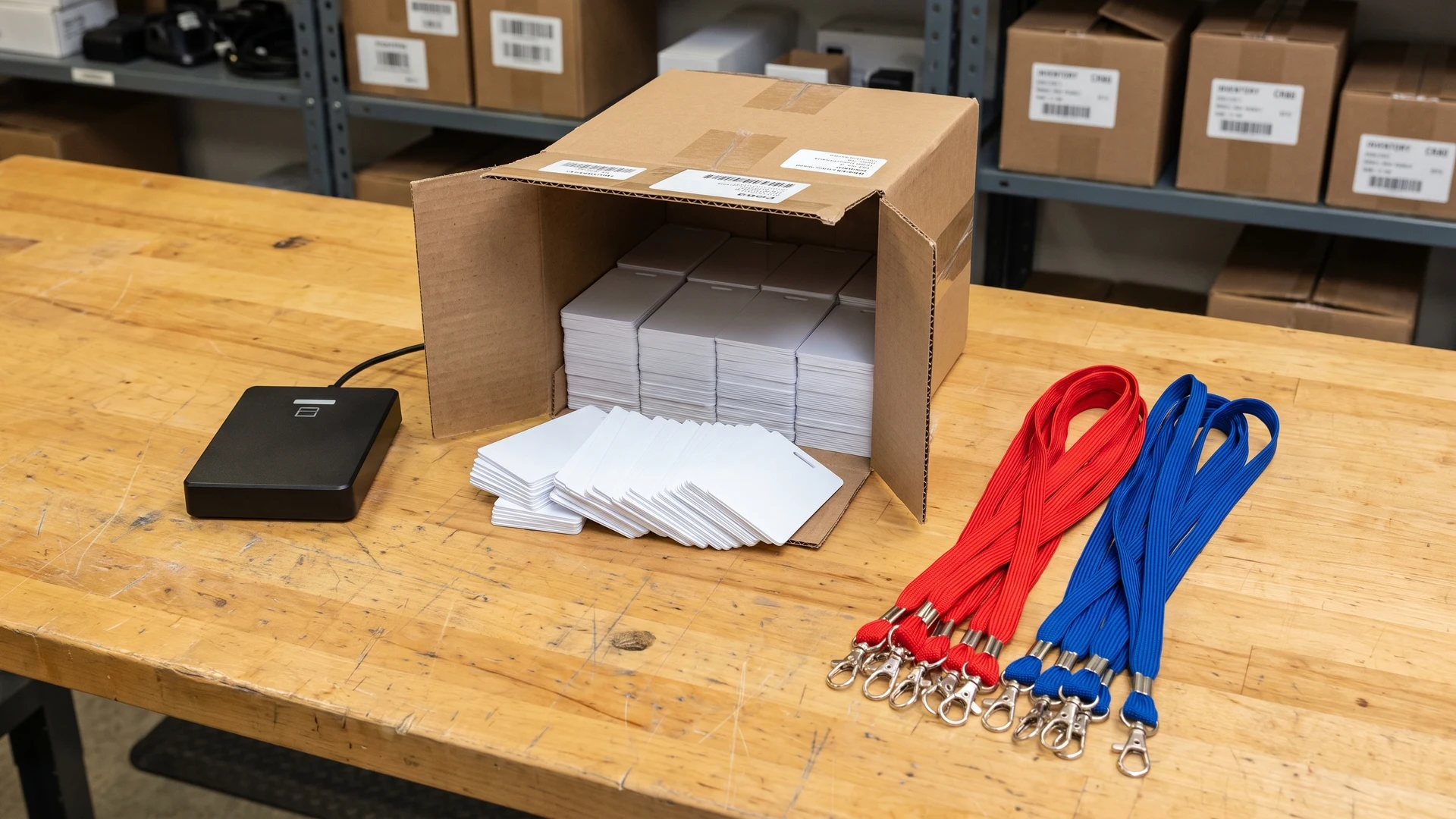
A hybrid visual approach offers a practical middle ground that combines the efficiency of centralized manufacturing with the flexibility of local identification. Your team can order a standardized base token and use simple localized additions, such as color-coded lanyards or site-specific stickers, to distinguish between branches. This method allows you to maintain a single core inventory while still giving local facility staff the visual cues they need to manage their daily operations. By blending bulk standardization with easy local adaptations, you achieve operational control without sacrificing local identity.
Embedding site codes into token chips
Encoding location-specific data into the physical chips ensures that your system recognizes exactly where a token belongs, even if the exterior design remains uniform. Site codes act as identifiers used to segment facility zones or reader networks, and they are encoded into the memory of the chip by writing structured binary or hexadecimal data into specific writable memory banks. For Radio Frequency Identification (RFID) systems, these codes are typically written to the Electronic Product Code (EPC) memory bank, which holds a defined bit-segment representing the organization or site prefix for fast scanning. In High-Frequency systems like Near Field Communication (NFC), site codes are written to the user memory and formatted using the NFC Data Exchange Format (NDEF), allowing an enabled phone or reader to parse the text or custom binary payloads.
Understanding these invisible data structures solves routing and access challenges across multiple facilities without requiring any visual differentiation on the token itself. When a reader scans an encrypted tag, it performs a cryptographic handshake using a secure access module or connects to a cloud database to match the unique signature back to a specific facility. Similarly, multi-location access control tokens often rely on hierarchical paths embedded within standard JSON Web Tokens (JWTs), which structure locations like directory paths so permissions easily inherit down to specific sub-locations. By standardizing how these site codes are written and read, your team guarantees that the physical tokens interact seamlessly with the readers at every distinct branch.
Steps to standardize data across all branches
Providing a concrete sequence for defining digital token data fields ensures that your payloads integrate reliably across all participating brands and sites. Data standardization prevents conflicts by creating a shared set of rules and formats, which stops two different sites from making two different tokens with the same identification number. Establishing these technical boundaries prevents race conditions and ensures every location interprets user rights perfectly. This structured approach builds your confidence in managing the complex technical rollout ahead.
- Establish common data formats: Your team must define standard data fields that all locations will use, such as the unique hardware-encoded serial number and the facility code that identifies the specific corporate branch. Creating this unified definition means that terms and identifiers mean the exact same thing everywhere across your network. This shared foundation ensures every site reads token values, expiration dates, and user rights in the exact same way. Establishing a common format clears up confusion and smoothes out synchronization when different locations share updates.
- Structure your token payloads: You should bundle multiple site-specific claims into organized arrays or nested objects within your token architecture. Setting up these structures allows parent-node permissions to cascade down to specific sub-locations seamlessly. This step prevents race conditions by setting clear rules for which site gets priority when two locations attempt to update the same token simultaneously. Structuring the payloads properly ensures that your data aligns with interoperability standards across different systems.
- Implement privacy and compliance rules: Your deployment must respect regulations that restrict personal data storage directly on the physical tokens. You can achieve this by using off-chain storage combined with cryptographic hashes on the token itself, which keeps sensitive user details hidden while proving authenticity. Maintaining these uniform privacy standards is critical because inconsistent encryption lets bad actors exploit the weakest link in your network. Centralizing these control rules manages when tokens are created or deleted while protecting your entire cross-site infrastructure.
Managing your physical token inventory
Managing physical token inventory across different geographical areas requires your team to address the logistical challenges of ordering, storing, and distributing physical stock. When you handle multiple token designs, you must track the consumption rates at each specific branch to maintain healthy stock levels and avoid localized shortages. Establishing a central procurement hub allows you to monitor inventory data collectively, which helps you predict when to reorder tokens before a regional office runs out completely. This centralized oversight reduces procurement waste and ensures that your physical supply chain remains just as organized as your digital system.
Distributing these physical assets smoothly involves setting clear protocols for how local branches request and receive new stock from the central hub. Your project managers should implement an inventory tracking system that automatically flags when a specific token variant reaches a minimum threshold. By anticipating demand and staging backup supplies strategically, your team prevents operational delays that occur when a facility cannot issue credentials to new users. Maintaining this structured approach to inventory logistics builds confidence that your token deployment will run efficiently on a daily basis.
Syncing token data with centralized reporting
Multi-site tokens must interact with backend reporting tools to provide clear visibility into usage patterns without overwhelming your corporate network. Properly configured scanning systems simplify cross-site data management and translate physical token usage into actionable data streams that your management team can easily interpret. Connecting your local edge servers to a centralized database creates a seamless flow of information that highlights performance trends across regions. This clear visibility helps technical decision-makers evaluate the success of the token deployment objectively.
Structuring cross-site data transfers
Cross-site data transfers rely on distributed edge-processing layers and standardized event syntax to move information securely. Because raw token scans generate high-frequency signals, your local edge servers must use middleware to filter duplicate reads and package the raw signals into structured events. These processed payloads combine the tag identifier with reader location metadata before moving across external sites using encrypted Application Programming Interfaces (APIs) or secure pipelines. Centralized analytics platforms then ingest these uniform data streams to build a comprehensive view of your entire operation.
Segmenting local usage reports
Segmenting local usage reports in your centralized backend relies heavily on metadata tagging and hierarchical data routing. As data packets arrive at the backend, ingestion pipelines stamp unique identifiers like store IDs or region codes into every metric entry for precise filtering. Identity and access management systems attach location claims to user profiles, which allows query engines to automatically inject filter rules for specific users. This segmentation ensures that local managers only see the data tied to their permitted sites, keeping the reporting interface clean and relevant.
Maintaining uniform privacy standards
Maintaining uniform privacy standards during data synchronization is critical because a single weak server can expose secure user tokens across every connected location. When you sync digital keys across multiple sites, uneven security creates major risks where bad actors might exploit the least secure site to enter all other connected systems. Your team must enforce consistent encryption so all sites use the same strong code to lock data in transit and at rest. Implementing centralized control ensures that matching security levels make it easy to spot vulnerabilities and protect the privacy of your users across the entire brand.
Executing a phased token rollout plan
Releasing a new token system to multiple locations demands a safe and sequential deployment strategy to protect your daily operations. Breaking the rollout down into manageable testing phases reduces the operational risk of launch failures and provides your implementation leads with a structured path to success. A well-planned sequence allows your organization to gather feedback and make technical adjustments before exposing the entire network to new hardware. Executing this process carefully ensures that every site adopts the new technology smoothly.
- Select a pilot location: Your team should begin the deployment at a single, well-controlled facility to test how the tokens perform in a real-world environment. This initial pilot phase allows you to monitor reader compatibility, data synchronization, and user adoption without impacting your entire organization. Gathering direct staff feedback during this stage helps you identify friction points and adjust your technical configurations before expanding. A successful pilot builds confidence and establishes a proven template for the rest of your network.
- Refine your training materials: You must use the insights gained from the pilot to improve the documentation and instructions provided to your facility staff. Clear training ensures that local administrators understand exactly how to issue, revoke, and troubleshoot the new tokens independently. Providing this educational support minimizes the volume of helpdesk tickets and empowers your team to handle minor operational issues on the ground. Well-prepared staff members are essential for maintaining a smooth and predictable experience as the system scales.
- Deploy to regional clusters: Your project managers should group the remaining facilities into logical clusters and roll out the system in steady, controlled waves. This phased expansion allows your central support team to focus their attention on a few sites at a time, ensuring that any technical anomalies are resolved quickly. Moving systematically through regional clusters prevents your network from being overwhelmed by simultaneous data migrations or hardware installations. This low-risk approach guarantees that your organization transitions to the new infrastructure with minimal disruption to daily workflows.
Preparing your token system for future growth
Designing your branding and technical architecture with scalability in mind ensures that entirely new sites can be added easily as your organization expands. When your team establishes standardized token formats and unified data schemas from the very beginning, integrating a newly acquired facility simply becomes a matter of applying your existing template. This forward-thinking strategy provides long-term reassurance that your chosen technology will scale smoothly alongside the business without requiring a complete system overhaul. The educational resources provided by RFID & NFC can help you continuously refine these foundational structures, giving you the confidence to manage complex technology implementations well into the future.
How do we balance a shared token design with local branding?
Start with one base token specification and layer simple local cues on top. Keep dimensions, material, and chip identical so equipment reads every token the same way. Use brand color, a small logo, or a short printed code to show the site. Publish a design hierarchy so teams stay consistent.
How should we encode site or location codes on the chip?
Write a consistent site code to a reserved field across all tokens. On Radio Frequency Identification (RFID) tags use the Electronic Product Code (EPC) or user memory. On Near Field Communication (NFC) tags use an NFC Data Exchange Format (NDEF) record. Document versions so systems and reports stay aligned.
What does a phased rollout across sites look like in practice?
Roll out in phases so operations never stall. Start with a pilot site, issue tokens that work in both the old and new format, and map identifiers between them. Configure equipment to accept both during transition, then cut over by site or department and monitor logs daily.
Which data fields should we standardize to avoid conflicts?
Agree on a shared data schema before issuing anything. Include the token’s unique identifier, a site code, a user or asset identifier, an access group, a validity window, device and door identifiers, timestamps, and event outcomes. Use the same names and formats everywhere to prevent collisions and misreads.
How do we centralize reporting yet keep site and brand views separate?
Label each event with location and brand when data arrives, and carry those labels into storage and dashboards. Partition data by location if performance requires it. Enforce view permissions through your identity system so users only see their sites. Prepare site, region, and global summaries in advance.